
What Does an Accounts Receivable Specialist Do? Duties, Skills, and Career Path
Learn what an accounts receivable specialist does, how to read an aging report, which skills employers look for, and how to prepare for an AR interview.
In this article
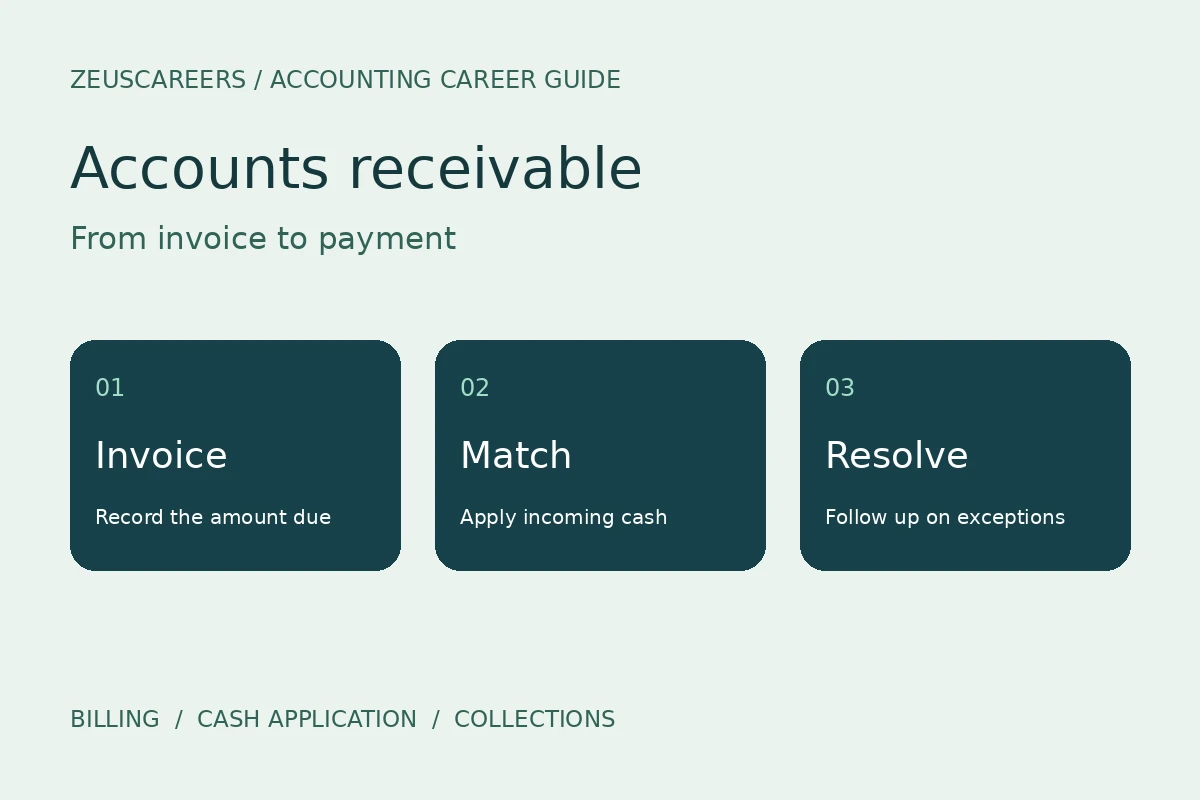
An accounts receivable (AR) specialist helps a business track what customers owe and make sure payments are recorded correctly. The work can involve sending invoices, applying payments, resolving billing disputes, and following up on overdue balances. It suits people who like solving problems with numbers and can communicate clearly when an account needs attention.
What does an accounts receivable specialist do?
Responsibilities vary by employer. A small team may give one specialist responsibility for billing, payment posting, and collections. A larger company may split those duties among billing, cash application, credit, and collections teams.
- Billing. Verify order or contract details and issue invoices with the right customer, amount, terms, and supporting documents.
- Cash application. Match incoming payments to open invoices using remittance details. Investigate unidentified receipts, partial payments, and deductions.
- Collections. Review overdue balances, contact customers professionally, and document payment commitments or unresolved issues.
- Dispute resolution. Work with sales, customer service, or operations to investigate pricing differences, missing documentation, and invoice errors.
- Reconciliation and close. Help reconcile customer balances and the AR subledger to the general ledger, documenting discrepancies for review.
How to read an accounts receivable aging report
An aging report groups open invoices by how long they have been outstanding. When a report ages invoices by due date, buckets commonly include current, 1–30 days past due, 31–60 days, and older balances. Confirm the report settings because some organizations also age by invoice date.
Imagine a customer has a $2,000 current invoice, a $900 invoice 12 days overdue, and a disputed $400 invoice 45 days overdue. Check for recent payments and unapplied cash first. Then confirm the dispute owner and supporting documents for the $400 item, and follow up on the $900 invoice according to your team's policy. The $2,000 invoice is still current. That sequence separates collections work from payment matching and dispute resolution.
Accounts receivable vs. accounts payable
Accounts receivable tracks money customers owe your company. Accounts payable (AP) tracks money your company owes suppliers. Both require accurate records and reconciliation, but AR emphasizes customer billing and incoming payments, while AP emphasizes supplier invoices and outgoing payments. Explore the related accounts payable specialist career guide.
Skills to show when applying for AR jobs
- Spreadsheet skills. Explain how you use filters, lookups, or pivot tables to compare transactions and isolate exceptions.
- Attention to detail. Show how you check customer IDs, invoice numbers, credits, and payment references before posting.
- Communication. Describe how you explain a balance, ask for missing information, and record a clear next step.
- Accounting systems. Name the ERP or billing tools you have used and explain the transactions or reports you worked with.
- Prioritization. Show how you balance overdue accounts, close deadlines, and issues that require input from another team.
For a resume bullet, start with the action and add the scope you can support. An example is “Matched customer remittances to open invoices and investigated short payments with billing and customer service before month-end review.” Add a verified volume or outcome if available. See the accounting and finance resume writing guide for more examples.
How to prepare for an accounts receivable interview
- A customer pays less than the invoice total. What do you do? Explain how you would verify the remittance, check for a credit or documented deduction, and route the unresolved amount for review.
- How would you prioritize overdue accounts? Discuss aging, balance size, dispute status, payment commitments, and the team's escalation policy.
- Tell me about a discrepancy you resolved. Describe what you checked, who helped, how you documented the outcome, and what you did to prevent a repeat.
Ask the employer who owns disputes, how the team measures performance, what systems are in use, and how duties are divided during close. The answers will help you distinguish a broad AR position from a job focused on cash application or collections.
How to get started in accounts receivable
Search for accounts receivable specialist, AR clerk, billing specialist, cash application specialist, and collections specialist. Compare responsibilities across listings because similar titles can cover different work. If you're coming from customer service, billing, or bookkeeping, identify examples of accurate data entry, payment reconciliation, and resolving account issues. Experienced specialists can explore senior AR, credit and collections, or order-to-cash roles based on the responsibilities they have developed.
Start with accounts receivable job listings on ZeusCareers, or visit the candidate resource hub for help preparing your next application.
Put your next move into action.
Explore accounting and finance opportunities, strengthen your resume, or find practical hiring tools.