
How to Become a Revenue Accountant
Explore revenue accountant duties, skills, interview questions, and a practical path from billing, accounts receivable, or general ledger accounting.
In this article
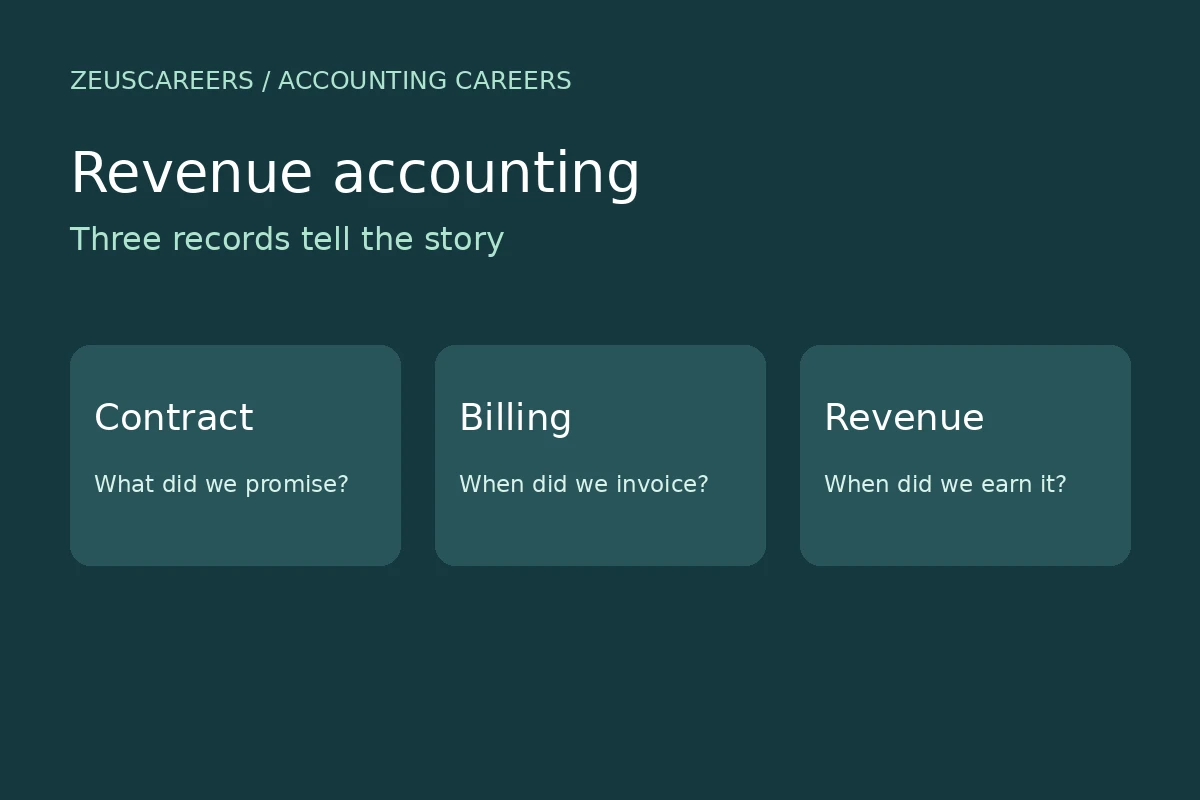
When a customer pays for a year of service upfront, the invoice, the cash receipt, and the revenue recorded for the month can all tell different stories. A revenue accountant helps connect those records and explain the timing. If you enjoy investigating discrepancies and translating contract terms into accounting records, revenue accounting may be a good next step.
What does a revenue accountant do?
Revenue accountants review customer arrangements, maintain revenue schedules, reconcile accounts, and support month-end close. The work varies by business. A subscription company may focus on renewals and contract changes, while a services company may spend more time reviewing project milestones and supporting records.
- Review source records. Compare signed agreements, billing records, service dates, and amendments. Flag missing documents or conflicting dates.
- Maintain schedules. Track what has been recorded, what remains deferred, and what changed from the previous close.
- Reconcile balances. Compare schedules with the general ledger and explain differences such as duplicate entries, credits, or timing issues.
- Document judgments. Record the facts, the applicable company policy, and the review or approval needed when a transaction falls outside the usual process.
A simple deferred revenue example
Suppose a fictional company receives $12,000 upfront for twelve months of service. Assume the company has determined that the service is delivered evenly and its approved schedule records $1,000 of revenue each month. After the first month, the schedule would show $1,000 recognized and $11,000 remaining deferred. A revenue accountant would check the service start date, tie the schedule to the ledger, and retain the supporting documents.
Use that example to practice explaining the difference between cash, invoicing, and revenue timing. In actual work, follow the applicable reporting requirements and company policy, and raise unusual contract terms for review.
Revenue accounting vs. accounts receivable
Accounts receivable tracks customer balances, incoming payments, and overdue invoices. Revenue accounting focuses on the amount and timing of revenue reported. Both teams may use the same contract or invoice, and both may investigate a credit. They use the information to answer different questions. Learn more in the accounts receivable specialist guide.
Build the skills employers can assess
- Reconciliations. Show how you trace a balance to source records and document unresolved differences.
- Spreadsheet controls. Practice matching invoice IDs, checking totals, and flagging duplicate or missing rows. Explain how you verify that a report is complete.
- Close experience. Describe the schedules or entries you prepared, who reviewed them, and how you communicated deadline risks.
- Contract literacy. Practice identifying start dates, billing terms, renewals, amendments, and delivery evidence. Know when to ask for a technical review.
Build a practice workbook using fictional data. Give three customer arrangements different billing dates and service periods, create monthly schedules, and reconcile the opening balance, activity, and closing balance. Add a short note explaining one discrepancy and the evidence you would request. Label the workbook as a practice project if you share it with employers.
Prepare for a revenue accountant interview
- Why might billing and revenue differ in a month? Explain timing with a simple prepaid service example and state your assumptions.
- A revenue schedule does not tie to the ledger. What do you check? Start with period and account scope, then trace entries, missing items, and adjustments.
- A customer changes an agreement mid-period. What would you do first? Gather the signed amendment and effective dates, document the change, and confirm how the team reviews it before updating the schedule.
Find your first revenue accounting role
Search for revenue accountant, revenue accounting analyst, and staff accountant roles with revenue responsibilities. If you come from billing or AR, highlight invoice investigations, credits, and reconciliations. If you come from general ledger accounting, emphasize close schedules, journal entries, and account review. Compare the actual duties in each listing because the same title can cover different work.
Browse revenue accountant jobs on ZeusCareers and use the accounting resume guide to turn your experience into specific application examples.
Put your next move into action.
Explore accounting and finance opportunities, strengthen your resume, or find practical hiring tools.